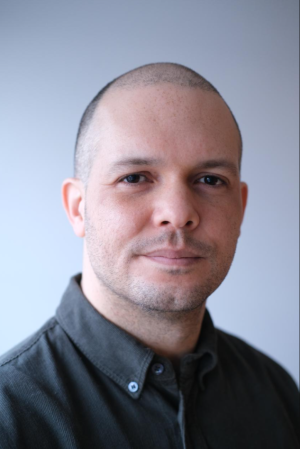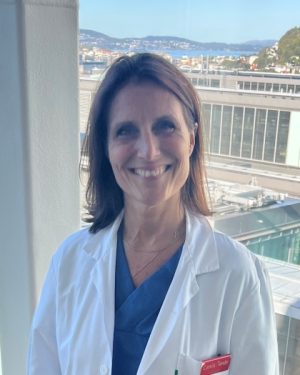
Professor Lars Herfindal is the new head of the Center for Pharmacy. He recently received the Olav Thon Foundation Prize for Outstanding Teaching in Higher Education for 2026.
Each year, the Olav Thon Foundation awards six national prizes for outstanding teaching in higher education. Each prize winner receives half a million kroner, in addition to a medal and diploma, skriver Olav Thon Stiftelsen på sine nettsider.
This year, Lars Herfindal is one of six award winners. The others are:
Professor Jostein Bakke, Earth Sciences, University of Bergen
Associate Professor Morten Brekke, Mathematics/Natural Sciences, University of Agder
Professor Karina Bakkeløkken Hjelmervik, Mathematics, University of Southeast Norway
Associate Professor Marit Valla, medicine, NTNU, Trondheim
Professor Odd Martin Vallersnes, Medicine, University of Oslo
The actual award ceremony will take place in the University auditorium on March 5th.
Bill Gates with Goalkeepers Nordic Champions. From left to right: Nagin Ravand, Jesper Theil Thomsen, Gunhild Stordalen, Bill Gates, Ole F. Norheim, Martin Blomberg, Asabea Britton. Foto/ill.: Dalberg Media/Gates Foundation
Harvard professor and BCEPS researcher Ole F. Norheim has been awarded the newly created award Goalkeepers Nordic Champion from the Gates Foundation for its work on global health and equitable prioritization.
Ole F. Norheim received the award at the Gates Foundation Goalkeepers Nordic event in Stockholm on January 22. The award is being presented for the first time and highlights Nordic leaders who contribute to progress towards the UN's 17 Sustainable Development Goals.
Norheim is the Mary B. Saltonstall Professor of Ethics and Public Health at the Harvard T.H. Chan School of Public Health, and one of the founders of the Bergen Center for Ethics and Prioritization (BCEPS) at the University of Bergen, where he remains a researcher.
Recognition for global impact
The Gates Foundation highlights Norheim's "influential contributions to advancing global health equity and leadership in developing evidence-based approaches to prioritization in health systems." The foundation emphasizes that his work "plays an important role in advancing gender equality, innovation, and sustainable development throughout the Nordic region."
The Goalkeepers initiative was established to inspire action and innovation related to the Sustainable Development Goals. This year's event in Stockholm was the first in the Nordic region and brought together leaders and change agents under the theme We Can't Stop at Almost.
Among the participants were Bill Gates, Ole Rosling (Gapminder Foundation) and Gunhild Stordalen (EAT Foundation). The program was hosted by Swedish journalist Jenny Strömstedt.
A presentation that made an impression
During the ceremony, Norheim gave a powerful and visually innovative presentation on child mortality globally. Instead of graphs and numbers, he shared the stage with a children's choir, each child representing one million children. The choir moved backwards when he spoke about lives lost – and forwards when he described lives that could be saved.
“Children are dying, and we know why – and we know how to stop it. We have reason to be hopeful. If we reinvest in health and scale up essential innovations in maternal, newborn and child care, by 2045 we will have saved 13 million more children’s lives,” said Norheim.
Six Nordic award winners
Norheim is one of six who received the award. Goalkeepers Nordic Champion in 2026. The other prize winners are:
Gunhild Stordalen, physician and chairman of the EAT Foundation and Stordalen Foundation (Norway)
Jesper Theil Thomsen, co-founder of SOUNDBOX and founder of Sagaorg (Denmark)
Nagin Ravand, Danish-Afghan football coach and founder of GLOBALL (Denmark)
Asabea Britton, midwife and influencer (Sweden)
Martin Blomberg, founder and CEO of Agteria Biotech (Sweden)
The award winners were nominated and selected by the Gates Foundation's Nordic Advisory Board, consisting of leaders from, among others, Maternity Foundation, Norrsken Foundation, Generation Pep, Laerdal Global Health and Novo Nordisk Foundation.
Helse Vest sin utdanningspris for 2025 gikk til PROFMED-prosjektet, for arbeidet med å styrke medisinstudentenes læring og profesjonelle identitet i klinisk praksis.
Helse Vest's education award for 2025 went to the PROFMED project, for its work to strengthen medical students' learning and professional identity in clinical practice.
The project has developed a simple and research-based model that gives medical students in practice security and increased learning outcomes. The core of the model is "guidance families" - small groups of LIS doctors and students who create relationships, a sense of responsibility and mastery without the use of additional resources.
– The project has great transfer value to other clinical specialties and educational courses. It is particularly relevant for the further development of medical education in Helse Vest, including the development of the Vestland physician on four campuses in Western Norway. The aim of the award is to highlight how important good education is for the health authorities, professional communities and students, says Hilde Brit Christiansen, Director of Employees, Organization and Technology in Helse Vest, in a press release from Helse Vest.
Bergen will be the hub of a new European research network that will educate future specialists in digital endocrinology. On January 22 and 23, the research leaders of the Endotrain consortium met at the University of Bergen to plan both the research projects and the doctoral education that is now being launched.
The scheme funds 19 PhD candidates from nine European countries. They will contribute to a wide range of projects that together will lift the field into a new digital age.
Gathered in Bergen for the first time
- Many of the research leaders have not met each other before. That is why it is important to sit together, discuss in groups and have room for informal conversations,” says project coordinator and professor Eystein Husebye at the Clinical Department 2.
A digital revolution in hormone diagnostics
methods for dynamic hormone measurements – a field that is rapidly developing.
Traditionally, diagnostics and follow-up of hormonal disorders have been based on single measurements. Now, new technology allows for continuous measurements throughout the day, based on methods developed in the EU project H2020-Ultradian.
In Endotrain, researchers will combine these measurements with digital tools that record sleep, stress, activity and self-perceived health. The goal is to better understand hormonal rhythms and give patients a more active role in their own assessment.
- We are in the midst of a transition from an analog to a digital era. With more patient-generated data, we can both detect disease earlier and provide more precise treatment,” says Husebye.
Interdisciplinary education for the needs of the future
The 19 PhD candidates will work on seven clinical studies investigating hormonal rhythms in different situations. Mathematicians will model the data, while experts in law, ethics and data storage will ensure the safe and correct handling of the information. Industry partners will also contribute, and innovation will be a central element of the research education.
– We want the candidates to be attractive to both academia and industry when they graduate, says Husebye.
Styrker Bergens posisjon
All PhD positions have now been advertised on Jobbnorge and Euraxess. The plan is for candidates to be in place for the kick-off meeting in Zurich in September.
For UiB, the project represents a significant boost.
– As a coordinating institution, we have a unique opportunity to build new interdisciplinary expertise and strengthen both European cooperation and internal cooperation at UiB. MSCA-DN projects are an important initiative for the university, says Husebye.
And when it comes to awards: The faculty has, as every year, announced the faculty's awards. For the research awards, K2 can nominate one candidate per category (except PhD work, in which case we can nominate 2 candidates). For the teaching award, the candidates must be nominated by an environment (e.g. departments, programme committees, subject groups, semester boards, research groups, networks and student organisations/cohorts. An environment can also nominate itself.)
The nominations must include a description of the initiatives in question, refer to the results achieved and discuss the transfer value and further plans for the initiatives.
The following may be grounds for nomination:
Quality-enhancing initiatives in education, including practical training
Initiatives to promote good learning environments
Work to facilitate increased internationalisation
Testing of new forms of teaching and assessment, including digital innovations
Extended use of student-active learning
Reasoning Publication of the Year
The departments are asked to provide a justification that includes arguments for quality, originality and innovation. Where relevant, the institute should also account for the consequences for further knowledge acquisition, clinical application or innovation. Nominations for publication of the year should reflect the department's own research.
Reasoning for this year's PhD work
The departments are asked to provide a brief justification that includes arguments for quality, originality and innovation. Where relevant, the institute should also account for possible consequences for further knowledge acquisition, clinical application or innovation. In addition, the candidate's own contribution and independence must be described.
Reasoning Research Environment of the Year
The institutes are asked to provide a justification that includes arguments based on research production, scientific quality or ability to innovate. The working environment, recruitment, gender balance and the ability to develop young researchers will also be emphasised and must be presented in the justification. The environment that is nominated should have close cooperation and not have the character of being a loosely linked network. In addition, contributions to national and international research collaboration, networking and contributions to the education of students and PhD candidates should be commented on.
Reasoning for the Dissemination Award
The institutes are asked to provide a brief justification that includes arguments for how a researcher or a research group has been able to communicate recent research in an outstanding way to a broad audience. Research dissemination shall be of high quality with regard to academic content, design and execution. It should engage, arouse curiosity, provide inspiration and new knowledge. The dissemination shall respond to society's need for information and knowledge about research and higher education.
Reasoning for the Innovation Award
The OECD defines innovation as the implementation of a new or significantly improved product (good or service), or process, a new marketing method, or a new organizational method in business practice, workplace organization, or external relations. Innovation also includes innovation activities in education.
The Innovation Award at the Faculty of Medicine is awarded to a person, a group or an innovation environment that meets one or more of the following criteria:
1) Has worked proactively, creatively and research-based to produce health-promoting
solutions to solve current societal challenges. This includes, but is not limited to, products, services, educational tools, etc.
2) Has worked to promote innovation culture and talent development within the field of innovation at MED.
3) Has worked to promote innovation activities in the field of education at MED.
Therefore, I ask to nominate candidates via the following links by February 2nd::
On Thursday, January 22, the technicians at the Faculty of Medicine gathered in the Great Hall for a rich and inspiring Technicians' Day 2026. The day offered a varied program with professional presentations, reflection, good conversations and useful perspectives on both working life, competence and future challenges.
We heard about change processes and resource perspectives, future competence needs, mobile cultural heritage, ultra-processed food, declining pollinators and autoimmune diseases. In addition, there was time for a quiz, lunch and a presentation of the Forsker Grand Prix 2025.
Many thanks to all speakers and participants for their commitment and great contributions throughout the day. An extra thank you to the organizers for a great program.
Technicians' Day 2026 has thus been successfully completed – we are already looking forward to next time!
What can genetic changes that occur in the mother's womb lead to when the child is an adult? Can they lead to cancer later in life and is it possible to avoid it? This and much more will be investigated by researchers at the upcoming K.G.Jebsen Center for Epimutations in Cancer finne ut av.
The K.G.Jebsen Foundation supports the new center for medical research in Bergen. The center will be established in July 2026 and is funded for approximately five years.
The center will research gene changes that occur in early fetal stages, and how these affect the risk of cancer in adulthood. The center is based on a recent breakthrough; researchers in Bergen have found that almost 10% of healthy women have a few cells in their bodies where the so-called BRCA1 gene is misregulated and permanently turned off. The misregulation probably occurs already during the first weeks of fetal life.
Those who have such cells have an increased risk of breast and ovarian cancer in adulthood. As many as 20% of the most aggressive cases of breast cancer appear to arise from such cells that are misregulated in utero. The discovery has provided a completely new way of looking at cancer risk and development.
The center that is now being established has two main goals: One goal is to find out why and how such misregulation occurs. The other is to find out whether similar errors can occur in other genes, and thus give rise to a risk for other forms of cancer. One of the first things to be investigated is a gene that can give rise to a risk for both bowel and uterine cancer.
The research center is led by professors Stian Knappskog, Camilla Krakstad and Halfdan Sørbye, and is based at Clinical Institute 2 at the University of Bergen, and the Cancer Clinic and the Women's Clinic at Haukeland University Hospital.