
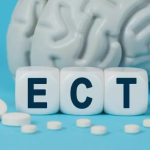
A new UiB study suggests that biological differences in the body may help determine who benefits from electroconvulsive therapy (ECT) for severe depression.
A new UiB study suggests that biological differences in the body may help determine who benefits from electroconvulsive therapy (ECT) for severe depression.
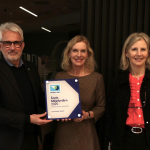
The University of Bergen has been awarded the Environmental Lighthouse of the Year 2025 award in the group and large enterprises category. The jury's justification highlights that UiB "has demonstrated targeted and comprehensive environmental management over time", and that the university's climate and environmental work is firmly anchored in top management and produces documentable results.

Diabetes Wellness Norway invites researchers at Norwegian research institutions to apply for funding for projects within diabetes research. The foundation wants to promote research that can ultimately contribute to better treatment methods – and hopefully a cure – for people living with diabetes.
Nominations for the Christie Prize 2026 are now open. The prize goes to a person or business that has contributed to good interaction between research, education and society, and has highlighted UiB's importance for societal development.
Deadline: February 27, 2026

Global Societal Challenges (GSU) is one of three priority areas at the University of Bergen. Funding is allocated to various activities such as events, visiting scholar stays, seminars, and other initiatives that can help develop cross faculty research projects related to the theme of “inequality” in a broad sense. Applications should include concrete plans for continued research collaboration and the submission of proposals to external funding sources. Application deadline: 1 March 2026.
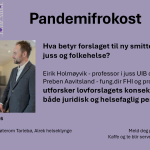
Time and place:
January 2026, 8:30–9:15 am Online or meeting room Tarlebø, Alrek health cluster Language: Norwegian Coffee and tea will be served
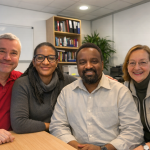
UiB has received 5.3 million euros from the EU for the PRoRota project, which will investigate whether probiotics, better hygiene education and mathematical models can reduce child mortality related to diarrhea in low- and middle-income countries. The project tests whether probiotics can improve the effect of the rotavirus vaccine in a large study with 4,000 newborns in Tanzania, Malawi and Ivory Coast. In addition, a warning system for rotavirus outbreaks is being developed and research is being conducted on how WASH routines can work better in practice.
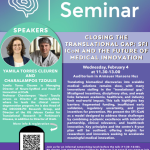
Wednesday 4 February – 11:30-13:00 – Auditorium in Armauer Hansens HusTranslating biomedical discoveries into scalable medical solutions is still slow, with many innovations stalling in the “translation gap”. Misaligned incentives, professional silos and weak links between academia, healthcare…
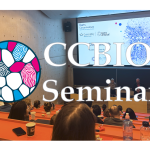
CCBIO welcomes you to the first spring seminar of 2026, which will take place on Thursday, January 29th in auditorium 4 at BBB. The event is open to all, and no registration is required. This time, CCBIO researcher Katrin Kleinmanns will be on stage, presenting the work that earned her the Young Cancer Researcher Award.
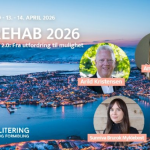
On April 13–14, 2026, professional communities from all over the country will gather at Scandic Ishavshotell when the national professional conference KreftREHAB is held in Tromsø for the first time. The conference is the year's most important meeting place for everyone working with cancer rehabilitation, and offers two days of professional in-depth study, inspiration and networking.

UiB will receive over 170 million kroner from the Research Council in December for new innovation centers and research projects within health, technology, the seabed, society and top research.
The institute is concerned that the number of applications to the Research Council is decreasing and that grants have become smaller. This coincides with new application routines with ongoing calls for proposals and quarantine schemes. The Research Council reports that they are receiving about half as many applications as before, which also means that the grant percentage is increasing. This provides room for opportunity for K2's researchers to receive funding.
The table (available by clicking "read more") below lists schemes that have ongoing calls for proposals where applications can be expected within 1-5 months. This opens up opportunities for innovative research, radical ideas and, not least, good opportunities for stays abroad. This is an underutilized opportunity that can have enormous significance for a future research career.
In addition, the Research Council has calls for longterm funding through SFF and SFI. For the most ambitious environments, there are Centers of Excellence (SFF), with up to 10 years of funding (6+4 years). For the most recent call, the deadline was in November 2025 and K2 researchers are eagerly waiting to see if they have progressed to round 2.
In addition, the Centers for Research-Driven Innovation (SFI) and the Research Center for Clinical Treatment (FKB) provide opportunities for 8-year projects with strong industrial and clinical roots. Here, our friends at K1 just received funding for the Innovation Center for Neuroresilience. New initiatives for these programs have not yet been announced.
The Research Council will launch a new application system with a simpler format, better calculation tools and clearer assessment criteria in 2026. Project funding from the Research Council is particularly important for K2's finances as indirect costs are also covered.
I hope this inspires –
Eystein Husebye, deputy director at K2
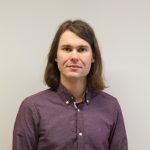
Jakub Vasicek
Dato: 29.januar
Place: Birkhaugsalen, Sentralblokken, HUS, Jonas Lies vei 65
Dissertation title: "Enabling Haplotype-Aware Proteomics to Better Connect Human Genomes and Proteomes"
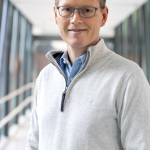
Arne Carlsen
Date: 21.january
Location: Aula in Nye SUS, Ullandhaug, building C
Title of the thesis: "Therapeutic Drug Monitoring of Infliximab and Adalimumab in Inflammatory Bowel Disease. Impact on treatment decisions"
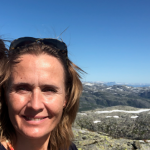
Annabel Eide Ohldieck
Date: 23.january
Location: Auditorium, Armauer Hansens Hus, Haukelandsveien 28
Dissertation title: "Sex-specific associations of blood pressure and body mass index with cardiovascular complications: Insights from the Hordaland Health Study"

Our own Lone Holst has helped collect material for the learning platform Farmasihistorie. Listen and read what 30 pharmacists have to offer in terms of stories from the world of pharmacy, at home and abroad.
The European Innovative Health Initiative (IHI) has now opened Call 12, an applicant-driven, one-stage call with five themes. Each theme is linked to one of the five specific objectives of IHI's strategic research and innovation agenda. The application deadline is 21 April 2026.
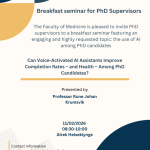
The Faculty of Medicine at the University of Bergen invites PhD supervisors to a breakfast seminar on a current and popular topic: artificial intelligence in everyday research. The seminar will take place on Tuesday, February 11, 2026, 8:30–10:00 AM at Alrek Health Center.

On February 3, we will open the doors of the Communications Department for a new drop-in offer aimed at academic staff.
Here you can get low-threshold help with everything from media work and communication to social media and visual profile.
Read more and see the details here: Drop-in for communication help.

This is a reminder that all researchers must check that their publications are registered in NVA (Christin), that the scientific articles are uploaded as full text and that the project number is included in publications where required, such as the Norwegian Research Council and the EU.

Bergen Research School in Inflammation (BRSI), in collaboration with Broegelmann's Research Laboratory (BRL), organizes project seminars every two weeks. The aim of the course is to provide a broad overview of a wide range of immunological research projects at the Faculty of Medicine and the Department of Clinical Medicine. The course…

The Civitan Norway Alzheimer's Research Fund is now opening applications for research funding for 2026. A total of NOK 1,000,000 will be awarded to Norwegian research projects that contribute to increased knowledge about Alzheimer's disease.

Working Environment Award 2025
Do you know of a person/group/unit that you believe has made a special contribution to the work environment?
Then you can nominate for the Working Environment Award for 2025.
The deadline is 31.01.2026.

PhD candidates at the University of Bergen now have the opportunity to test their communication skills in the international Three Minute Thesis (3MT) competition. The competition challenges participants to present their research in just three minutes, with only one static slide as visual support, to a general audience.
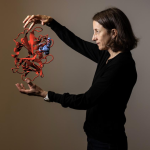
Lipids build the membranes that surround the cell and separate its internal compartments from each other. This is what gives each compartment in the cell its own identity and makes normal cell function possible. For this system to work, lipids must constantly be transported precisely between different membranes. This is a process that scientists have long had limited understanding of.
Dear everyone,
Happy New Year! I hope everyone has had a few quiet days during the Christmas season and has started 2026 with new energy.
2026 will bring a number of changes, among other things, the financial officers from the faculty will move to the "PhD office" on the 8th floor of the lab building and be co-located with "our" financial officers (who are also employed at the faculty). This entails some relocation of office space for PhD candidates and postdocs, I apologize for the inconvenience this causes for those affected. Before the economists can move in, some rebuilding is required, but I hope that it does not take too long.
Let me also use this editorial to congratulate Professor Edvin Schei from IGS and his project group PROFMED (Medical Students' Professional Identity Formation During Practice in Hospitals), which was awarded the Western Norway Regional Health Authority's education award last night at the Western Norway Regional Health Authority's education conference. PROFMED aims to improve medical students' hospital placement learning, and support the development of a professional physician’s identity by: 1) systematically preparing students for workplace participation, and 2) educating the hospital physicians who interact with the students.
The project has been very successful, and the application of the knowledge from it will have a great effect on the successful completion of the hospital placement with many more students than before.
Have a really good weekend!
Silke